

CanadaGPS.ca
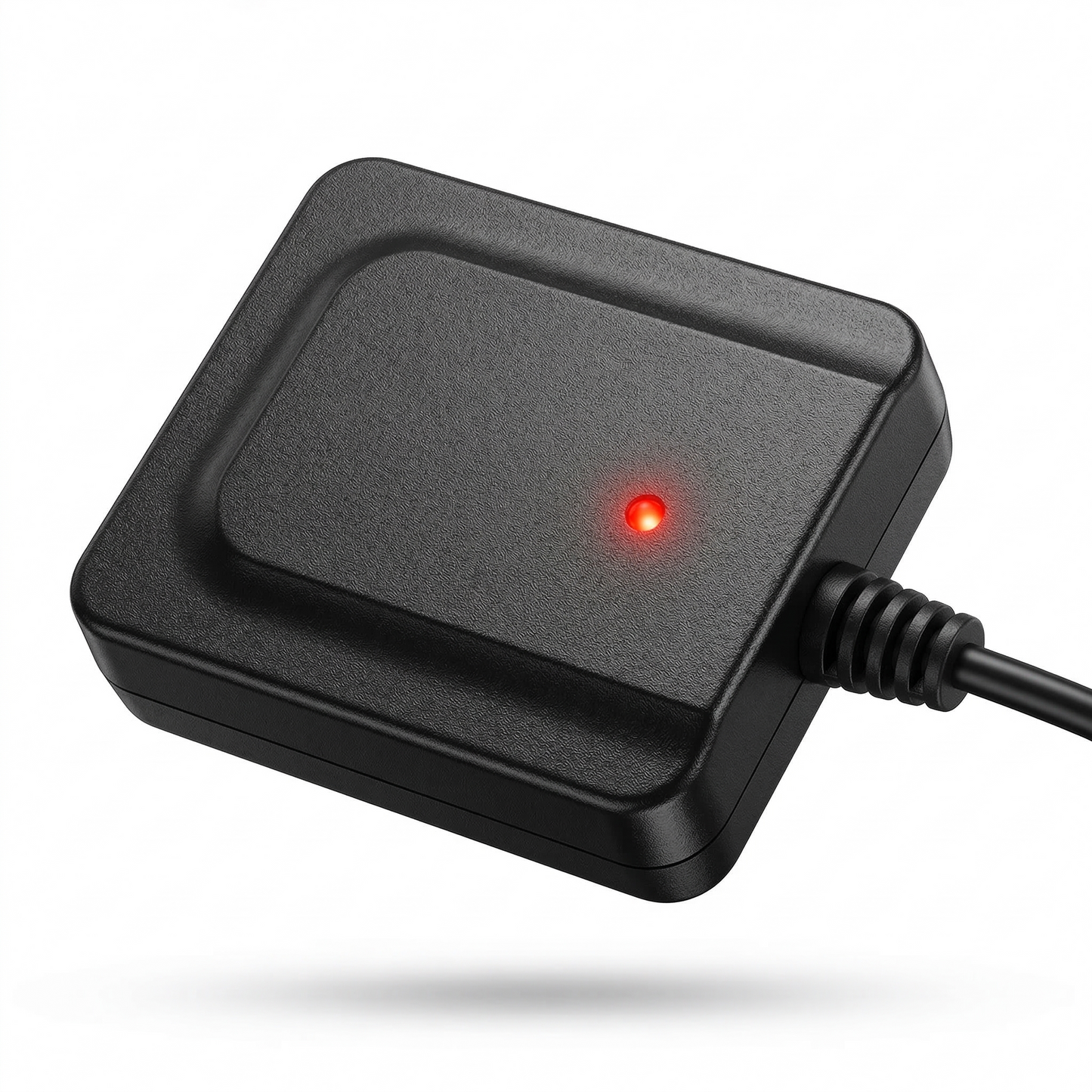
Navisys GR-8018T 50Hz TTL GNSS Receiver (u-blox M9V, Indoor UDR “Untethered Dead Reckoning”, Accelerometer & Gyroscope, IPX7 Waterproof, 1.5m Accuracy)
Navisys GR-8018T 50Hz TTL GNSS Receiver (u-blox M9V, Indoor UDR “Untethered Dead Reckoning”, Accelerometer & Gyroscope, IPX7 Waterproof, 1.5m Accuracy)
Country of Origin: Taiwan
Couldn't load pickup availability

The NaviSys GR-8018T is an industrial-grade, high-performance GNSS receiver built on the advanced u-blox NEO-M9V chip. Designed for robust positioning accuracy, it integrates cutting-edge technologies for challenging environments and high-speed tracking applications.
With fused GNSS + dead reckoning at up to 50 Hz, built-in accelerometer and gyroscope sensors for Untethered Dead Reckoning (UDR), and concurrent multi-constellation tracking, the GR-8018T keeps positioning continuous in tunnels, parking garages, and urban canyons—while delivering smooth high-speed tracks when satellite visibility is strong.
The GR-8018T is IPX7 waterproof, fully EMI-shielded, magnet-mount ready, and operates from −40°C to 85°C. It connects over TTL / UART with a 1 m cable and works with MCUs, SBCs, and embedded industrial hosts.
TTL / UART interface · u-blox NEO-M9V · Up to 50 Hz GNSS+DR · Untethered Dead Reckoning · 1.5 m accuracy · IPX7 · 40 × 45 × 18 mm · 1 m cable
Key Features
TTL / UART Interface
- TTL / UART serial output for embedded hosts
- Default cable length: 1 m (GR-8018T)
- Supply: 3.3–5.5 VDC
→ Direct TTL connection for MCUs, SBCs, and embedded systems
Up to 50 Hz Update Rate
- Up to 50 Hz fused GNSS+DR update rates
- 50 Hz for RMC / GGA (priority messages)
- Ideal for high-speed objects such as racing vehicles
→ Dense track points instead of sparse dotted lines
Untethered Dead Reckoning (UDR)
- Built-in accelerometer and gyroscope
- Maintains positioning in tunnels, basements, and parking garages
- Navigation can start on power-up before a GNSS fix
- Position error without GNSS: about 10% of distance traveled
→ Continuous tracks when satellites disappear
High Sensitivity & Reliability
- Acquisition: −147 dBm
- Tracking & navigation: −159 dBm
- AssistNow Online for faster positioning
- RF interference / jamming detection · spoofing detection and reporting
→ Extra resilience in noisy or contested RF environments
Multi-Constellation · 1.5 m Accuracy
- 92-channel u-blox M9 engine (NEO-M9V)
- Concurrent GPS, Galileo, QZSS, SBAS, GLONASS, BeiDou
- Horizontal 1.5 m · Vertical 3 m (CEP 50%)
- SBAS: WAAS, EGNOS, MSAS, GAGAN · QZSS L1S SLAS
→ Meter-class accuracy with broad satellite visibility
Industrial Form Factor
- 40 × 45 × 18 mm
- IPX7 waterproof · fully EMI shielded
- Built-in magnet · amber LED fix indicator
- Operating temperature: −40°C to 85°C (without battery)
→ Built for outdoor and industrial deployment
50 Hz High Update Rate Demo
Unlike the dotted lines typically seen with low-rate GNSS, the data points in this demo form a smoothly presented curve, showcasing improved tracking at up to 50 Hz.

Indoor UDR Demo
This demonstration drives into an indoor parking tower: ascend to the second floor along the outer rectangular path, then descend using the inner rectangular path. The total indoor route covers approximately 400 meters. The logged path closely follows the actual route, with minor deviations from travel-related dead-reckoning error.

Applications
- High-speed tracking (e.g., racing vehicles)
- Urban environments, tunnels, and areas with poor satellite visibility
- Industrial and outdoor applications needing robust, precise positioning
Receiver Specifications
GNSS Receiver Type
- 92-channel u-blox M9 engine (NEO-M9V)
- GPS L1 C/A · SBAS L1 C/A
- QZSS L1 C/A/S · Galileo E1 B/C
- GLONASS L1OF (1598.0625–1605.375 MHz)
- BeiDou B1I (1561.098 MHz)
- SBAS: WAAS, EGNOS, MSAS, GAGAN
Accuracy
| Horizontal position | 1.5 m (CEP, 50%) Open sky with SBAS and QZSS enabled, −130 dBm, >6 satellites |
| Vertical position | 3 m (CEP, 50%) |
| Velocity | 0.08 m/s (68% @ 30 m/s) |
| Dynamic attitude | Heading 0.3° · Pitch 0.4° · Roll 0.6° (68% @ 30 m/s) |
| Position error without GNSS | ~10% of distance traveled with UDR |
| Time pulse | RMS 30 ns · 99% 60 ns · 0.25 Hz ~ 10 MHz |
Navigation Performance
| Update rate | 50 Hz for RMC, GGA 1 Hz for VTG, GLL, GSA, GSV |
| Priority NMEA | Up to 50 Hz: RMC, VTG, GNS, GGA |
| Non-priority NMEA | Up to 20 Hz: GSA, GSV, GST, ZDA |
| Max. altitude | 80,000 m |
| Max. velocity | < 500 m/s or 1,800 km/h |
| Max. dynamics | ≤ 4 g |
TTFF & Sensitivity
| Hot start | 2 s |
| Cold start | 24 s (−130 dBm, 50%) |
| Acquisition | −147 dBm |
| Tracking & navigation | −159 dBm |
Measurement Data Output
- Protocols: NMEA, u-blox Binary
- NMEA: 4.11 (default), 4.10, 4.0, 2.3, 2.1
- UART: N,8,1 · baud 4800–921600 bps (default 115200)
Power
| Power supply | 3.3 ~ 5.5 VDC |
Mechanical & Environment
| Dimension | 40 × 45 × 18 mm |
| Cable length | 1 m (GR-8018T) |
| Fixing | Strong magnet at the bottom |
| LED indicator | Amber |
| Operating temperature | Without battery: −40°C to 85°C With battery: −20°C to 60°C |
| Storage temperature | Without battery: −40°C to 85°C With battery: −20°C to 60°C |
| Operating humidity | 5% ~ 95% non-condensing |
| Waterproof | IPX7 |
How to Perform UDR Calibration
To ensure optimal Untethered Dead Reckoning performance, calibrate the system as follows:
-
Initial setup
- Drive to an open area (e.g., a parking lot) with strong GNSS reception.
- Remain stationary for at least 3 minutes to achieve a reliable GNSS fix.
-
Figure-of-eight pattern
- Drive a figure-of-eight three times, or make about 10 left and right turns (each ≥ 90°) at a minimum of 30 km/h.
-
Straight-line driving
- Drive straight for at least 100 m at a minimum of 40 km/h.
-
Monitor calibration status
- With NaviViewerM9V, you can watch calibration status transitions similar to the example below.

-
Calibration status examples
- Status transitions look similar to these examples:


What's in the Box
- Navisys GR-8018T GNSS Receiver × 1
Product Resources
Official Documents
Downloads
This GR-8018 TTL / RS232 variant uses a serial (UART) interface rather than USB. No USB driver install is required for the receiver itself. Connect via a compatible RS-232 port or TTL/UART host, then use the tools below for configuration and diagnostics.
Tools